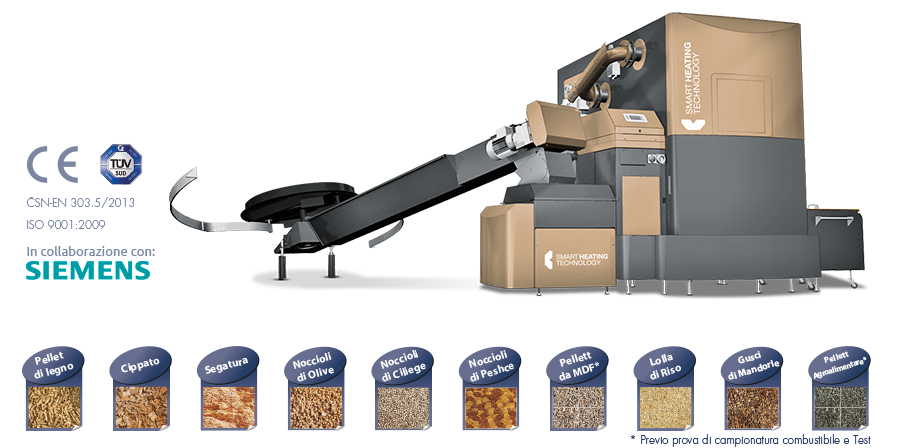
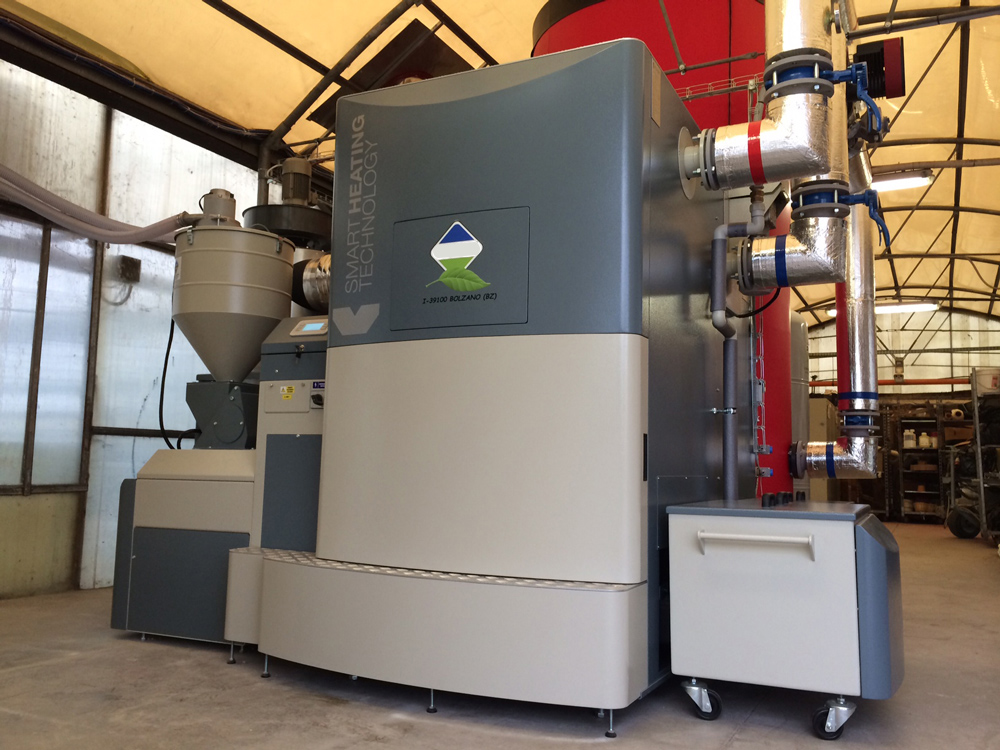
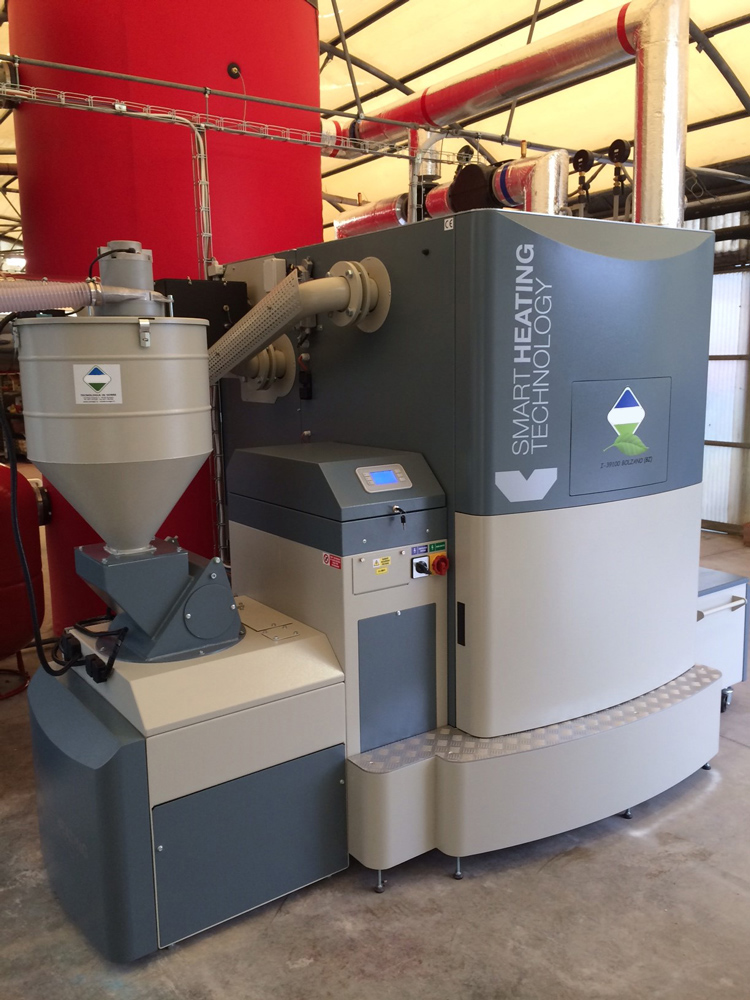
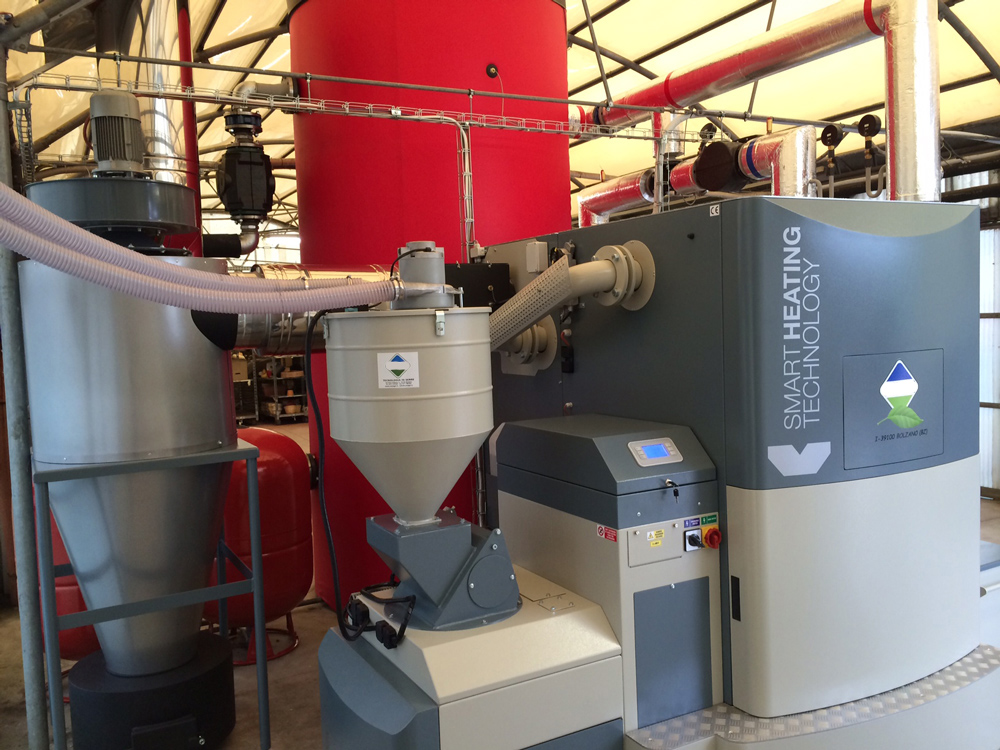
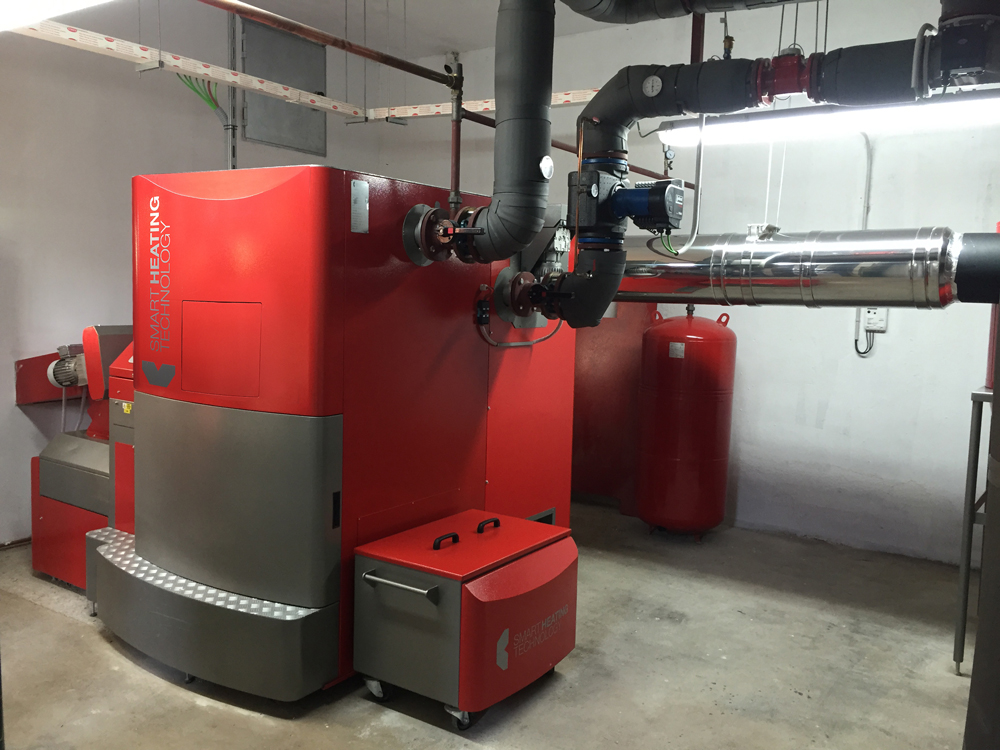
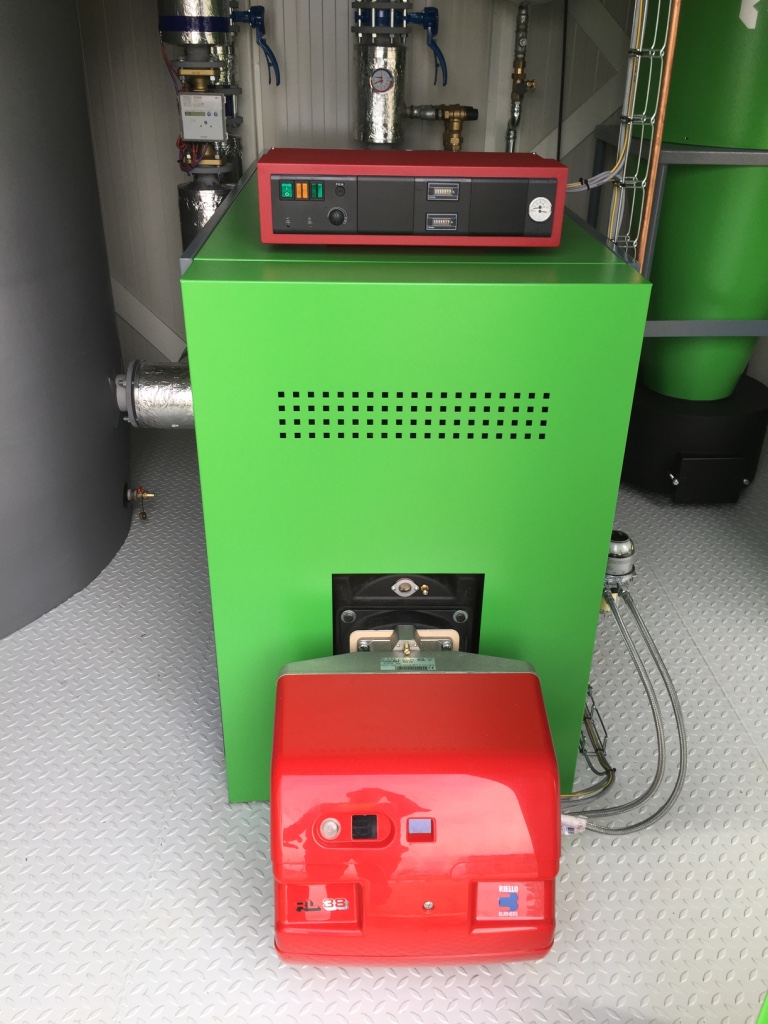
| SMART BOILERS OPERATING DATA |
| Marking |
|
220 |
| Nominal power Pn |
kW |
199 |
| Partial load (power) Pp |
kW |
50 |
| Boiler efficiency at Pn |
% |
>95 |
| Boiler class |
|
5 |
| Water volume |
l |
460 |
Diameter of water
connection |
“ |
3 |
| Diameter of water connection |
DN |
80 |
Hydraulic-pressure drop
of the boiler
at the temperature fall 20° |
mbar
|
80
|
| Boiler temperature |
°C |
60–90° |
| Minimal temperature of returnable water |
°C |
55 |
| Maximal operational pressure |
bar |
3,5 |
| Test pressure |
bar |
6,5 |
| Temperature of furnace |
°C |
|
| Pressure of furmace |
mbar |
-0,04 |
| Required draught of the chimney |
mbar |
0,2 |
| Requirement for the forced draught |
|
Yes |
| Combustion temperature at Pn |
°C |
104,9 |
| Combustion temperature at Pp |
°C |
72,4 |
| Diameter of flue gas duct |
mm |
220 |
| Diameter of chimney |
mm |
250 |
| Wood pellets – C1 |
Tested
fuel |
D6, M10, A1,5, DU90,0 |
| Wood chips – B1 |
P45, M30, A3.0 |
| Electrical connection |
|
3+N+PE 50Hz 230/400V TN-C-S |
| Conveyor engine |
W |
550 |
| Feeding auger engine |
W |
550 |
| Exchanger cleaning engine (s) |
W
|
550
|
| Ash-removing engine |
W |
550 |
| Fan of primary air |
W |
66 |
| Fan of secondary air 1 |
W |
66 |
| Fan of secondary air 2 |
W |
66 |
| Chimney exhaust fan |
W |
300 |
| Electrical ignition |
W |
1600 |
| Separation flap valve |
W |
6,5 |
|
| Wood pellets |
Wood chips |
| Rated |
Minimum |
Rated |
Minimum |
| Rated heat capacity |
kW |
199 |
199 |
199 |
199 |
Combustion product
temperature |
°C |
96,1 |
73,1 |
104,9 |
72,4 |
| Fuel consumption |
kg/hour |
42,60 |
12,48 |
50,60 |
14,50 |
| Input water temperature |
°C |
57,8 |
67,2 |
55,0 |
71,3 |
| Outlet water temperature |
°C |
73,0 |
82,6 |
77,1 |
79,0 |
| Cooling water temperature |
°C |
11,1 |
7,8 |
10,6 |
11,5 |
| Cooling water flow rate |
m3/hod |
2,695 |
0,650 |
2,673 |
0,755 |
| Draught behind boiler |
Pa |
130,0 |
30,0 |
130,0 |
30,0 |
| Ambient temperature |
°C |
25,2 |
24,9 |
24,1 |
26,2 |
| Relative air humidity |
% |
42,3 |
41,1 |
41,0 |
40,0 |
| Barometric pressure |
kPa |
98,92 |
98,95 |
99,07 |
99,07 |
| Oxygen O2 |
% |
8,02 |
12,71 |
8,02 |
12,71 |
| Carbon dioxide CO2 |
% |
11,79 |
7,53 |
11,79 |
7,53 |
| Carbon monoxide CO |
ppm |
58 |
181 |
58 |
181 |
| Higher hydrocarbons OGC |
ppm |
7 |
4 |
7 |
4 |
| Nitrogen dioxides Nox |
ppm |
65 |
38 |
65 |
38 |
| Dust |
mg/m3 |
29 |
18 |
51 |
44 |
| Carbon monoxide CO |
mg/m3 |
62 |
301 |
112 |
244 |
| Higher hydrocarbons OGC |
mg/m3 |
10 |
8 |
2 |
4 |
| Nitrogen dioxides Nox |
mg/m3 |
113 |
102 |
151 |
120 |
| Dust |
mg/m3 |
25 |
25 |
44 |
51 |
| Mass flow rate gases |
kg/sec |
0,155 |
0,053 |
0,148 |
0,066 |
| Stoichiometric oxygen value |
m3/kg |
0,949 |
0,948 |
0,848 |
0,848 |
| Stoichiometric air value |
m3/kg |
4,520 |
4,512 |
4,037 |
4,036 |
| Stoichiometric volumeof dry combustion products |
m3/kg |
4,445 |
4,438 |
3,949 |
3,948 |
| Stoichiometric air multiple |
|
1,61 |
2,51 |
1,60 |
2,50 |
| Volume of dry combustion products, actual |
m3/kg |
7,411 |
11,553 |
6,435 |
10,048 |
| Volume of H2O in the combustion air |
m3/kg |
0,101 |
0,150 |
0,081 |
0,140 |
| Volume of H2O in the combustion produts |
m3/kg |
0,867 |
0,916 |
0,956 |
1,015 |
| Maximum volume CO2 |
% |
19,60 |
19,66 |
19,22 |
19,22 |
| Loss of sensible heat of combustion products (chimney) |
% |
4,5 |
4,5 |
5,3 |
4,5 |
| Loss of gas underburning |
% |
0,0 |
0,2 |
0,0 |
0,2 |
| Loss of mechanical underburning |
% |
0,1 |
0,2 |
0,0 |
0,1 |
| Loss of heat transfer into the environment |
% |
0,6 |
0,9 |
0,6 |
0,7 |
| Total loss |
% |
5,2 |
5,8 |
6,0 |
5,4 |
| Efficiency – indirect method |
% |
94,8 |
94,2 |
94,0 |
94,6 |
| Heat input |
kW |
203,3 |
59,5 |
216,8 |
62,1 |
| Heat capacity |
kW |
193,7 |
56,6 |
206,2 |
59,3 |
| Uncertainty of determining heat capacity |
% +/- |
8,1 |
2,4 |
8,7 |
2,5 |
| Efficiency – direct method |
% |
95,3 |
95,1 |
95,1 |
95,5 |
| Capacity / rated output |
% |
97,3 |
28,4 |
103,6 |
29,8 |
|